Spatio-Temporal Coverage & Datacube Standards
Enabling Big Earth Data Interoperability.
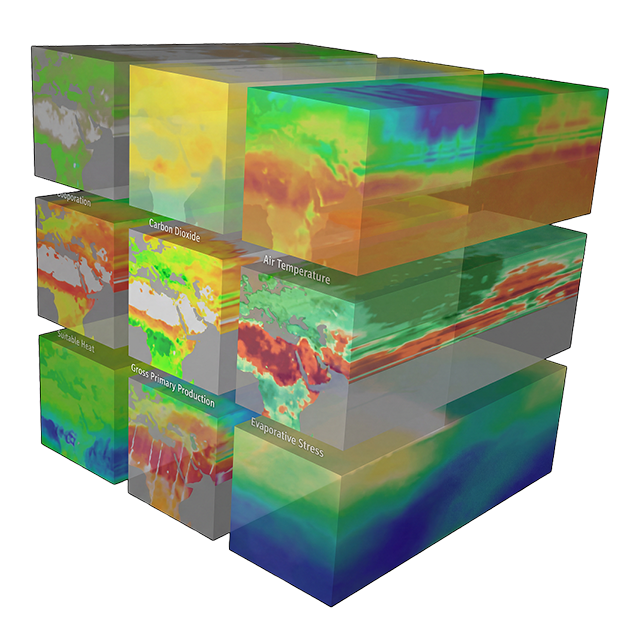
Spatio-Temporal Big Data
Coverages
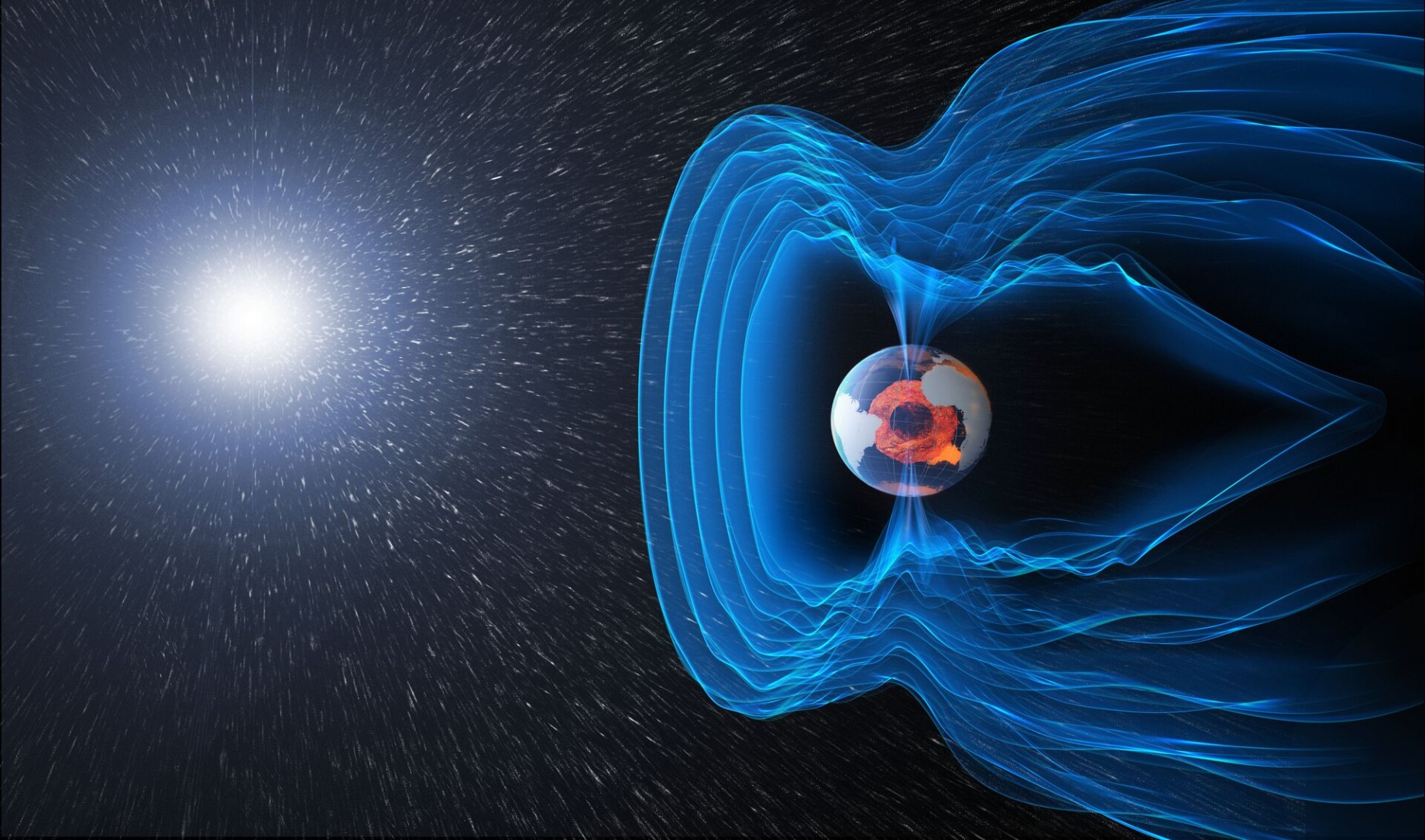
Coverages constitute a unifying paradigm for the digital representation of space/time varying phenomena, in physics called "field" (as in "magnetic field").
Technically, such phenomena are represented as spatio-temporal regular and irregular grids, point clouds, or general meshes. Obviously, coverages are of prime importance to model both sensor data (such as satellite imagery) and simulation output (such as weather forecasts).
In particular, multi-dimensional datacubes fall under this category, such as
- 1-D sensor time series,
- 2-D satellite imagery,
- 3-D x/y/t image time series and x/y/z geoscientific models,
- 4-D x/y/z/t climate and ocean data sets, etc.

Interoperability
Coverage & Datacube Standards
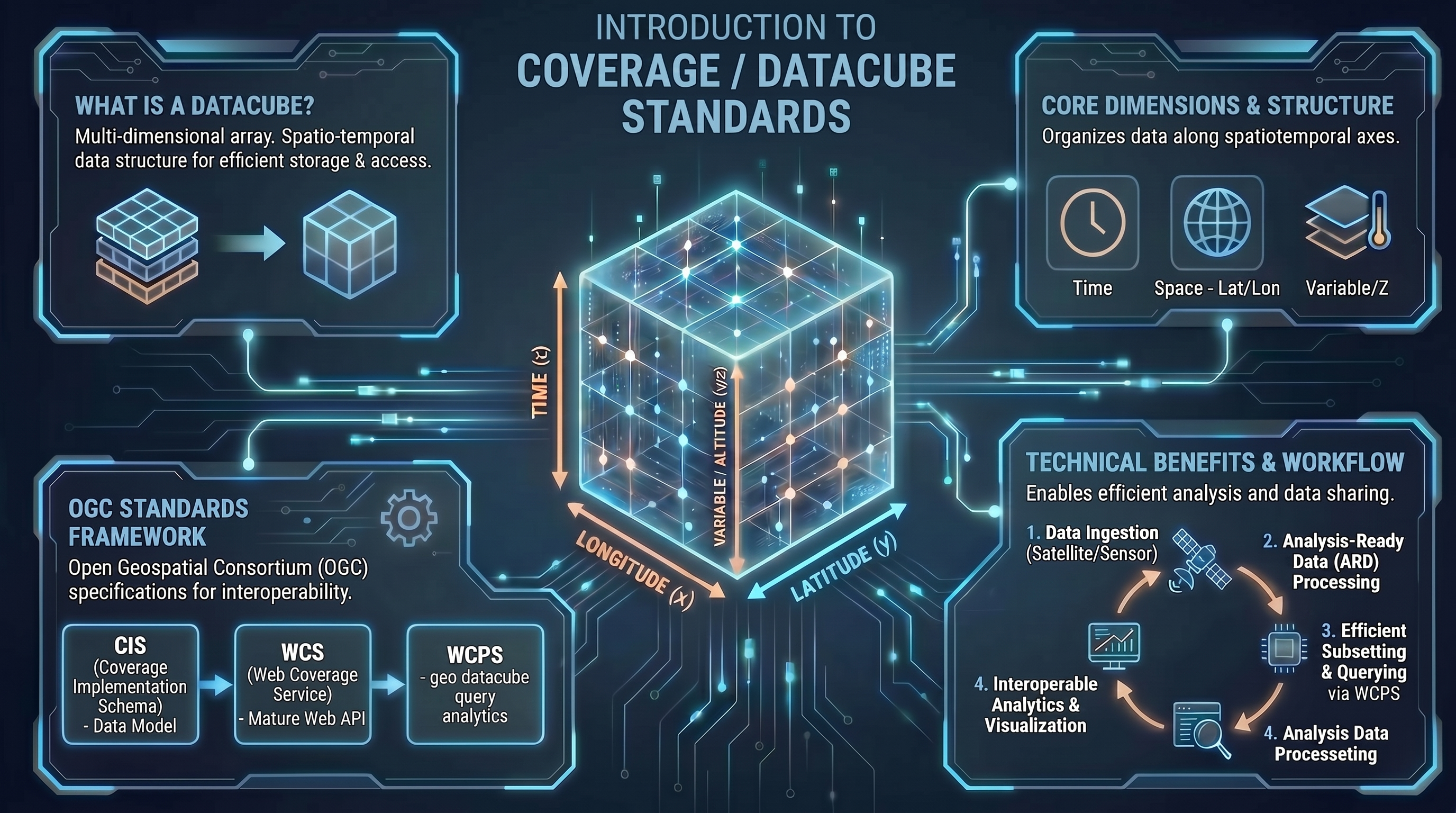
Many questions reach us on coverages and datacubes, being main drivers of standardization since 20+ years. This site, which is a service kindly offered to the community by Constructor University and rasdaman GmbH, offers in-depth information on the ISO / OGC coverage standards - from primer, further resources, FAQ, news and standardization progress. It addresses the coverage data model, Coverage Implemetation Schema (CIS), as well as its harmonized service model, the Web Coverage Service (WCS) modular suite of standards combined with the Web Coverage Processing Service (WCPS) geo datacube query language, which is also adopted by ISO.
This site is a sister site of the OGC Coverages.DWG public wiki.
Coverages form a critical pillar for interoperable spatio-temporal data access and analytics. The key coverage standards - CIS, WCS, and WCPS - are stable, mature, maintained, and heavily used - check the News! Expert voices confirm this:
- "OGC OAPI-Coverages is the equivalent of WCS", "WCS 2.0 was very, very close to the principles and implementation of an OGC API" -- Andrea Aime, GeoSolutions, on YouTube
- "Web developers who have not heard of OGC standards before immediately feel at home with these coverage standards" -- Stephan Siemen, ECMWF
- "WCS is the natural way to deliver and exploit coverage data." -- Jordi Escriu, Facilitator INSPIRE Thematic Cluster #3: Elevation, Orthoimagery, Reference systems and Geographical grids
- "As a WCS the data is of most value" -- Perry Peterson, Pyxis Innovation
- "CIS 1.1 is what I've been waiting for." -- Kathi Schleidt, INSPIRE expert
Quick Start
Resources
From zero to hero with coverages and datacubes:





Coverages Progress
News
- August 2026: WCPS 2 uploaded to OGC pending for entering the adoption process (unofficial preview)
- August 2026: OGC Seeks Public Comment on Proposed OGC Coverage Implementation Schema (CIS) 1.2
- July 2026: OGC OAB agrees to roll out the prospective OGC CIS 1.2, based on 19123-2:2026, for public comment
- June 2026: 19123-2:2026 has entered the OGC adoption pipeline to become the next OGC CIS specification
- January 2026: 19123-2 DIS ballot finalizes: 100% YES, 0% NO, so adopted as new ISO CIS standard -- next: re-adoption by OGC as CIS 1.2
- October 2025: 19123-2 FDIS ballot commences in ISO
- October 2025: WCS-Interpolation enhancement finally adopted and published
- June 2025: ballot comments are worked in, submitting 19123-2 for DIS ballot
- March 2025: ISO CD ballot on 19123-2 ends with zero NO votes
- March 2025: OGC starts the Public Comment Period for the WCS Interpolation standard enhancement
- January 2025: OAB accepts an enhancement to the WCS Interpolation extension, previously adopted by the OGC Coverages.SWG with no objection to unanimous consent
- Fall 2024: OGC adopts ISO 19123-1 and 19123-3 as Abstract Topic 6.1 and 6.3, replacing the original Abstract Topic 6
- August 2024: OGC announces Validation Tools August 2024 Release of Beta environment, among others with an update of the WCS 2.0 test suites - thanks, Dirk Stenger & team
- June 2024: Functional enhancement to WCS proposed: interpolated slicing at slice points between grid positions
- June 2024: 19123-1 and 19123-3 have finished adoption cycle to become Abstract Topic 6, soon to be published
- September 2023: OGC adoption of 19123-1 and 19123-3 as new Abstract Topic 6 started
- June 2023: 19123-1 and 19123-3 adopted by ISO TC211 without any NO vote
- February 2023: 19123-1 and 19123-3 presented at OGC TC meeting to Coverages.SWG and Architecture.DWG
- November 2022: 19123-1 and 19123-3 out for FDIS ballot, following resolution of 19111-related comments in tight collaboration with UK
- March 2022: 19123-1 and 19123-3 successfully pass DIS ballot; UK comments about 19111 use to be resolved
- October 2021: 19123-3 (draft) submitted by the editing team for DIS ballot
- August 2021: Following a positive ballot with overwhelming support by the nations, ISO accepts 19123-3 as an NWIP to establish coverage processing fundamentals, based on the twin specification 19123-1 defining the abstract coverage model.
- June 2021: the rasdaman-based INSPIRE coverage portal, https://inspire-wcs.eu, gets endorsed as the (single) official Good Practice for INSPIRE coverages.
- November 2020: MIG-T has adopted the INSPIRE coverage portal, https://inspire-wcs.eu, as a candidate good practice. INSPIRE-WCS is based on OGC CIS, WCS and WCPS
- November 2020: Delegations had no objection to ISO WD 19123-1, so it can move on to next level, Committee Draft (CD)
- June 2020: ISO TC211 WG6 has distributed a Working Draft of 19123-1, the forthcoming abstract coverage standard complementing the concrete 19123-2 = OGC CIS.
- 2019: WCS 2.1 have been adopted, together with updates in the corresponding WCS extensions. This adds CIS 1.1 GeneralGridCoverage as a unified, simplified coverage type encompassing all raster / gridded coverage types. Further, WCPS 1.1 is established.
- July 2019: ISO adopts SQL/MDA (Multi-Dimensional Arrays) as 9075-15:2019. This Part 15 of SQL adds datacube analytics into the database language. Note that OGC WCPS is structurally equivalent to SQL/MDA (WCPS requests can be transformed automatically into SQL), however WCPS adds spatial and temporal semantics whereas MDA is domain-agnostic and can handle Earth, Space, and Life science data.
- September 2017: At the Southampton TC meeting the Coverages.DWG has moved to approve establishing a Datacube Domain Working Group; close collaboration between the Coverages.DWG and the forthcoming Datacube.DWG is planned as the OGC datacube standard is the Coverage Implementation Schema.
- April 2017: CIS 1.1 is adopted by OGC as an Interface Standard. This opens the way for introducing CIS 1.1 to ISO to become the next version of ISO 19123-2.
Visitors
Legal
Terms of Reference
This site is created and maintained by Peter Baumann, a key shaper of the coverage standards in OGC and ISO since 20+ years.
Contact: Peter Baumann, pbaumann@constructor.university
Responsible Maintainer Entity: Constructor University Bremen gGmbH, Campus Ring 1, 28759 Bremen
Images
ESA, Youtube, Peter Baumann, rasdaman, nano banana
External Links
All external links implemented on this site have been checked for conformance with the spirit and intent of this site, and have found conformant at this time. However, the maintainer of this site has no control over the (change of) contents of the referred websites and, therefore, does not assume any responsibility for the contents of referred websites.
German Data Protection Regulation (GDPR)
The controller responsible for the described data collection and processing is Constructor University. Our EarthServer data protection officer, Peter Baumann, will be happy to provide you with information or suggestions on the topic of data protection.
When you visit our website, the Web server temporarily stores usage information on our server machine (running in Germany) for statistical purposes in the form of a log in order to improve the quality of our website and to fulfill funding agency statistics reporting obligations.
We do not transfer your personal data to third parties without your express consent. We use flagcounter for determining the country of visitors which obviously is in accordance with GDPR.
When it comes to processing your personal data, the GDPR grants you certain rights as a website user:
- Right of Access (Art. 15 of the GDPR): You have the right to request confirmation as to whether personal data concerning you is being processed; where this is the case, you have a right of access to this personal data and to the information specified in Article 15 of the GDPR.
- Right to Rectification and Right to Erasure (Art. 16 and 17 of the GDPR): You have the right to immediately request the rectification of incorrect personal data concerning you and, if necessary, the completion of incomplete personal data. You also have the right to request that personal data concerning you be erased immediately if one of the reasons listed in Art. 17 of the GDPR applies in detail, e.g. if the data is no longer required for the purposes for which it was collected.
- Right to Restriction of Processing (Art. 18 of the GDPR): You have the right to request a restriction of processing for the duration of a review if any of the conditions specified in Art. 18 of the GDPR have been met, e.g. if you have lodged an objection to the processing.
- Right to Data Portability (Art. 20 of the GDPR): In certain cases (which are outlined in detail in Article 20 of the GDPR), you have the right to obtain from us your personal data in a structured, standard, machine-readable format or to request the transfer of such data to a third party.
- Right to Object (Art. 21 of the GDPR): If data is collected on the basis of Art. 6(1)(f) of the GDPR (data processing on the grounds of legitimate interests), you have the right to object to the processing at any time for reasons arising from your particular situation. If you make such an objection, we will no longer process your personal data unless we can demonstrate compelling legitimate grounds for the processing which override your interests, rights, and freedoms or for the establishment, exercise, or defense of legal claims.
- Right to Lodge a Complaint with a Supervisory Authorityr: In accordance with Art. 77 of the GDPR, you have the right to lodge a complaint with a supervisory authority if you believe that the processing of your personal data violates data protection regulations. This right to lodge a complaint may particularly be exercised before a supervisory authority in the EU member state where you reside, work, or where you suspect that your rights have been infringed.